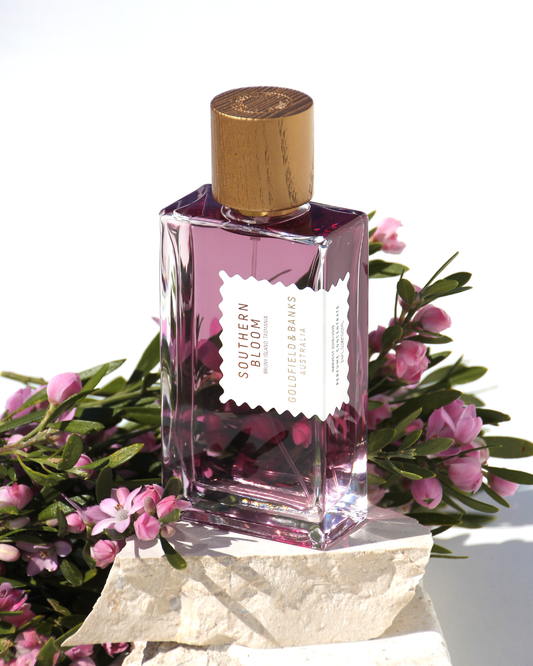
Boronia is a floral note extracted from the small, bell-shaped flowers of Boronia megastigma, a shrub native to Western Australia and cultivated in Tasmania. It is a rare and expensive floral absolute with a fruity, green and violet-like scent, often compared to blackcurrant and apricot.
What does Boronia smell like?
Boronia absolute smells sweet and fruity with a distinctive violet facet from beta-ionone, a green, blackcurrant-like freshness and a warm, hay-like undertone. It is often described as having a tea-like, slightly woody dryness. Compared with violet, it is more fruity and complex; compared with osmanthus, it is greener and less leathery.
Where Boronia comes from
Boronia is native to south-western Western Australia. Commercial cultivation for perfume is based in Tasmania, where growers harvest the flowers in spring and extract them with solvents to make concrete and absolute. The absolute is produced in small volumes and is one of perfumery's more costly naturals.
- Also known as: Brown boronia, Scented boronia
- Fragrance family: Floral (fruity floral)
- Type: Natural
- Main origins: Tasmania, Australia
- How it's obtained: Solvent extraction to concrete and absolute
- Key aroma molecules: Beta-ionone, dodecyl acetate
Boronia in perfume history
Boronia is among the few Australian native plants established as a perfumery material. Tasmanian commercial production grew in the late twentieth century, and research partnerships with the University of Tasmania have worked on yield and consistency. It has been used as a rare, luxury note in niche and high-end perfumery.
Boronia in modern perfumery
Boronia is valued by niche perfumers for its unique fruity-violet character. It is also used in flavours to add a blackcurrant and apricot nuance. Supply is limited, and wild harvesting in Western Australia has raised sustainability concerns, so cultivated Tasmanian production is preferred.
How Boronia wears and what it pairs with
Boronia sits in the heart with good tenacity. It pairs with violet, blackcurrant, osmanthus, iris, rose, sandalwood and tea.