


Guaiac Wood
-
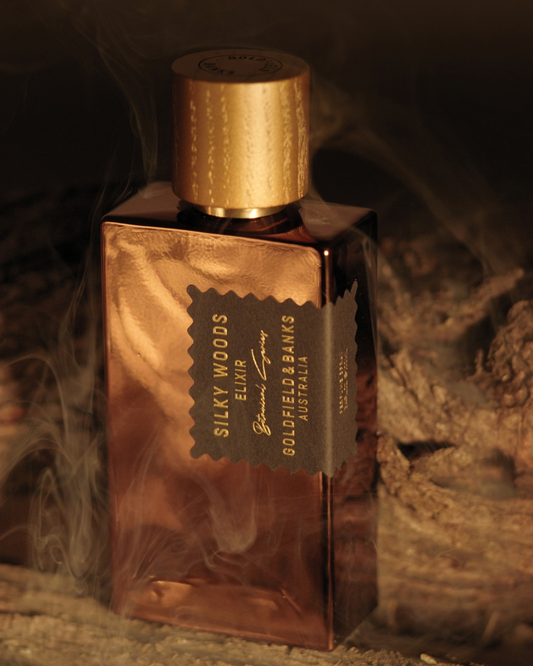

Silky Woods Elixir
by Goldfield & Banks Australia
Where the original Silky Woods stays delicate, this extrait pushes the same, more...Regular price From $73.00Regular price -


Golden Wood
Golden Wood leans gourmand without ever tipping into dessert territory. Bergamot, mandarin, more...Regular price $285.00Regular price -

Carbon Sapphire Supercharged
Carbon Sapphire Supercharged is built for the smallest hours of the night,, more...Regular price $1,440.00Regular price -

Dom Rosa Millésimé
Dom Rosa Millésimé was created a decade after the original, as a, more...Regular price $280.00Regular price$0.00Sale price $280.00 -


Matsukita
Matsukita opens with green bergamot sparked by pink pepper and a warm, more...Regular price $500.00Regular price$0.00Sale price $500.00 -


Tobacco Sapphire
Tobacco Sapphire is called the smoky jewel of the Sapphire Collection, and, more...Regular price $935.00Regular price -

Magnetic Wood
Magnetic Wood carries the particular optimism of the first proper day of, more...Regular price $320.00Regular price -


Oud Abramad
by BDK Parfums
Oud Abramad opens at dawn, when heavy doors close on a palace, more...Regular price From $60.00Regular price$0.00Sale price From $60.00 -

Neverending
Neverending imagines a journey to the moon: the cold vulnerability of open, more...Regular price $260.00Regular price$0.00Sale price $260.00 -


Desert Rosewood
by Goldfield & Banks Australia
A heady rush of resinous desert rosewood, native to Australia's arid Central, more...Regular price From $45.00Regular price$0.00Sale price From $45.00 -

E Cashmere Musk
E Cashmere Musk is built around a single sensation: the soft, enveloping, more...Regular price $430.00Regular price -


Glorious
Glorious smells like wandering into an overgrown English orchard in late summer,, more...Regular price $315.00Regular price


