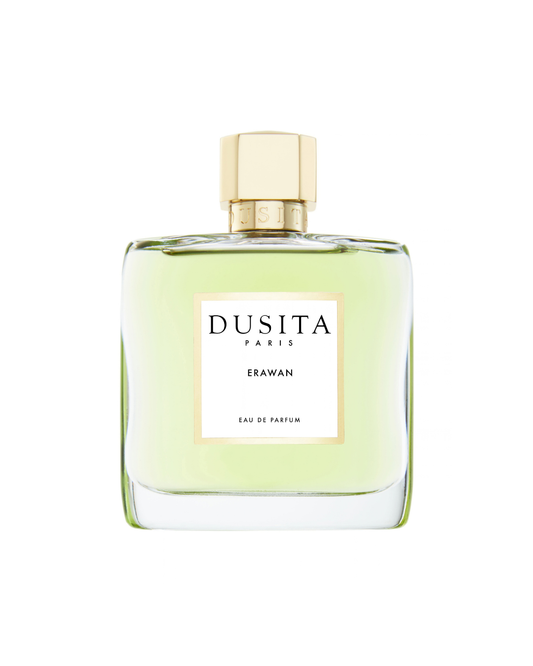
Lily-of-the-Valley is a fresh floral note inspired by the tiny bell-shaped flowers of Convallaria majalis, a woodland plant of Europe and Asia. Known in French as muguet, it smells green, dewy and delicately sweet, with hints of lemon and rose, and it is always created synthetically because the flower yields no usable extract.
What does Lily-of-the-Valley smell like?
Lily-of-the-valley has a crisp, watery freshness that sets it apart from heady white flowers. The scent is clean and bright, with a green, leafy snap, a soft honeyed sweetness and airy, lemony and rosy facets. It feels transparent and springlike rather than lush. Perfume versions range from soapy and clean to dewy and green, depending on the balance of aldehydic, citrus and floral materials.
How perfumers create Lily-of-the-Valley
The flower's oils cannot be extracted economically, so muguet is one of perfumery's classic fantasy reconstructions, known as a muguet accord. It relies on muguet aldehydes such as hydroxycitronellal, and historically on lilial and lyral, now banned in the EU. Perfumers add linalool, citronellol, phenylethyl alcohol and Hedione for freshness and body, with newer captive molecules from major fragrance houses replacing restricted ingredients.
Lily-of-the-Valley in perfume history
Muguet has a strong cultural presence in France, where sprigs are exchanged on 1 May for good luck. Hydroxycitronellal, introduced in the early twentieth century, made modern muguet accords possible. The best-known example is Dior Diorissimo (1956), created by Edmond Roudnitska, still considered the benchmark lily-of-the-valley fragrance. Christian Dior himself was famously fond of the flower.
Lily-of-the-Valley in modern perfumery
The EU ban on lilial and lyral forced major reformulations and spurred research into safer muguet molecules. Lily-of-the-valley remains popular in fresh florals, clean-skin fragrances and laundry and personal-care products.
How Lily-of-the-Valley wears and what it pairs with
Muguet usually sits in the heart and lends brightness to the opening. Its longevity is moderate, though modern molecules can make it last longer. It pairs with rose, jasmine, lilac, green leaves, bergamot, peony and white musk.
Fragrances featuring Lily-of-the-Valley
Safety and regulation
Hydroxycitronellal is an EU-declarable allergen and restricted by IFRA, and lilial (butylphenyl methylpropional) and lyral (HICC) are prohibited in cosmetics sold in the EU.