Osmanthus
Osmanthus is a floral note extracted from the tiny golden-orange flowers of Osmanthus fragrans, an evergreen shrub native to China. It smells fruity and leathery, with a strong dried-apricot nuance, tea-like facets and a soft floral warmth.
What does Osmanthus smell like?
Osmanthus absolute is famous for its apricot and peach character, from gamma-decalactone and related lactones. It also has leathery, suede-like and tea-like facets, and a violet note from ionones. Compared with jasmine it is fruitier and less indolic; compared with champaca, it is more leathery and apricot-like.
Where Osmanthus comes from
Osmanthus is cultivated in southern China, where it blooms in September and October. Flowers are harvested and extracted with solvents to produce concrete and absolute. Yields are low, with around a tonne of flowers producing roughly a kilo of extract.
- Also known as: Sweet osmanthus, Tea olive, Guihua
- Fragrance family: Floral (fruity floral)
- Type: Natural (synthetic accords also common)
- Main origins: China (especially Guangxi and Zhejiang)
- How it's obtained: Solvent extraction to concrete and absolute
- Key aroma molecules: Gamma-decalactone, beta-ionone, dihydro-beta-ionone, linalool, linalool oxides
Osmanthus in perfume history
Osmanthus has been prized in China for centuries, used to scent tea, wine and sweets, and associated with the mid-autumn festival. The city of Guilin is named after the flower. In Western perfumery, osmanthus became more prominent from the late twentieth century.
Osmanthus in modern perfumery
Osmanthus is popular in niche perfumery for its unusual fruity-leathery character. Hermès Osmanthe Yunnan by Jean-Claude Ellena is one of the best-known osmanthus fragrances.
How Osmanthus wears and what it pairs with
Osmanthus sits in the heart with good tenacity. It pairs with tea, leather, apricot, violet, iris, jasmine, sandalwood and musk.
Fragrances featuring Osmanthus
- Hermès Osmanthe Yunnan
Safety and regulation
Osmanthus absolute contains naturally occurring EU-declarable allergens such as linalool.
Fragrances with Osmanthus
-
Hanuman
Hanuman takes its name from the Hindu monkey god and the Chinese, more...Regular price $1,230.00Regular priceSale price $1,230.00 -
Cosmos Flower
Cosmos Flower is named for a bloom the brand calls the flower, more...Regular price $610.00Regular priceSale price $610.00 -
Oud Sapphire
Oud Sapphire is a straightforward love letter to oud, one of perfumery's, more...Regular price $935.00Regular priceSale price $935.00 -
Vanille Caviar
by BDK Parfums
Vanille Caviar treats black not as absence but as a source of, more...Regular price $290.00Regular priceSale price $290.00 -
1872 Feminine
1872 Feminine shares its name and heritage with its masculine counterpart, but, more...Regular price From $390.00Regular price$0.00Sale price From $390.00 -
Doux Ennui
Doux Ennui borrows its opulence from Marie Antoinette's court, all gilt mirrors, more...Regular price $260.00Regular priceSale price $260.00 -
Resplendent
Resplendent imagines a queen in dark red silk, watching from a high, more...Regular price $1,880.00Regular priceSale price $1,880.00 -
BEST SELLER
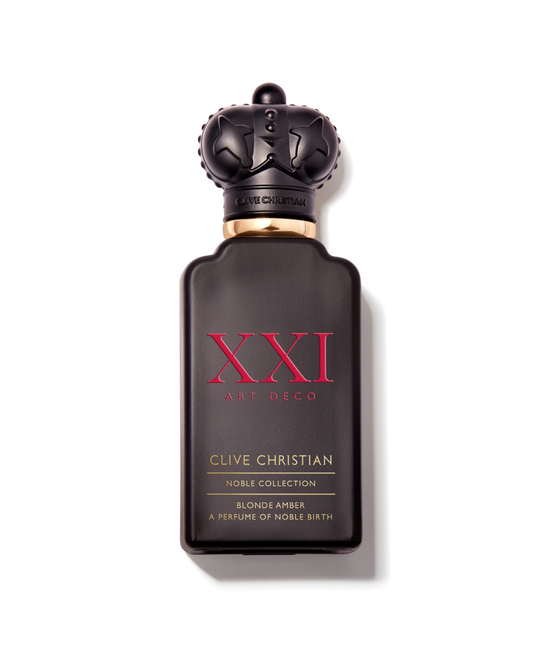
Blonde Amber
Blonde Amber takes its inspiration from the glamour of the Art Deco, more...Regular price $610.00Regular price$0.00Sale price $610.00 -
Nuda Veritas Extrait
The Extrait takes the same starting point as the original Nuda Veritas,, more...Regular price $415.00Regular priceSale price $415.00 -
Choeur des Anges
Choeur des Anges opens in full colour: blood orange and blackcurrant spark, more...Regular price $275.00Regular price$0.00Sale price $275.00 -
Magnetic Wood
Magnetic Wood carries the particular optimism of the first proper day of, more...Regular price $320.00Regular priceSale price $320.00 -
Hasu
Hasu is named for the Chinese Year of the Rabbit, a creature, more...Regular price $1,440.00Regular priceSale price $1,440.00